Young people grow up in a real community where they are trusted with meaningful responsibility for their own lives.
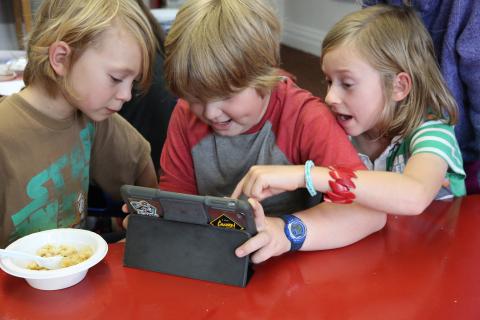
Students from early childhood through high school age explore the world at their own pace, follow interests that matter to them, and learn how to live alongside others with respect and care.
This is not a program layered onto childhood. It is a school built on the belief that growing up is something children do actively, not something done to them. Sudbury Valley provides a stable, thoughtfully designed environment where that process can unfold naturally.
Rather than directing this process, Sudbury Valley creates the conditions that allow it to thrive. Students choose how they spend their time and what they pursue. Over time, interests deepen and become more complex, much as they do in adult life. Learning happens not because it is required, but because it becomes useful and meaningful.
What makes the Sudbury model distinct
Sudbury Valley is not unstructured or hands off. It is a school with clear expectations, shared rules, and a democratic framework.
Students of all ages are respected as capable individuals. They plan and carry out their days without assigned work, grades, or evaluations. There is no set curriculum and no predetermined outcomes. Instead, students learn to make choices, live with consequences, and take responsibility for their time and actions.
Rules that protect individual freedom and community wellbeing are created by students and staff together through the School Meeting. Conflicts are handled through a peer based judicial system grounded in fairness and due process. These structures shape daily life and give students real experience with self governance.
Why it works
Freedom is at the heart of the Sudbury experience, but it exists within a living community. Students interact daily with people of many ages, interests, and abilities. Younger students learn from older ones. Older students develop leadership and perspective. Knowledge and culture move naturally through the school.
Play and conversation are essential, not secondary. Through play, students take risks and stretch their abilities. Through constant conversation, they build language, reasoning, empathy, and confidence.
Learning is not divided into subjects or stages. It accumulates through experience, effort, and reflection. Skills such as reading, writing, math, problem solving, and collaboration emerge as students encounter real reasons to use them.
Decades of experience show that when children are trusted, respected, and given time, they grow into capable, motivated adults who know how to learn and adapt.
How it looks in practice
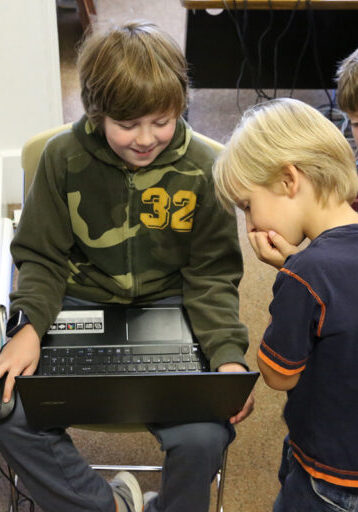
Daily life at Sudbury Valley is active and varied. Students choose challenging things to do because they want to, not because they are required. They build, experiment, debate ideas, fail, try again, and learn from one another. Over time, they step into roles they once admired in older students.
Learning happens in layers. Projects, games, and long running interests draw on books, conversations, observation, trial and error, and lived experience. Often students cannot point to a single moment when something was learned, only that it gradually became part of who they are.
A democratic framework that holds it together
Sudbury Valley operates as a democratic institution. Every student and staff member has an equal voice in the School Meeting, which makes decisions about rules, finances, staffing, and shared spaces. Authority comes from responsibility delegated by the community, not from age or position.
All members of the school participate in the judicial system, which protects individual freedom and community trust. This commitment to fairness ensures that freedom does not become chaos and that responsibility is shared rather than imposed.
The result is a school culture that feels both spacious and grounded. Students experience real autonomy, real accountability, and real belonging.
Suggested Reading
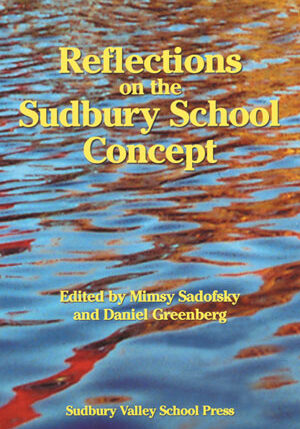
Reflections on the Sudbury School Concept
How do Sudbury Schools work? Are there any guarantees?